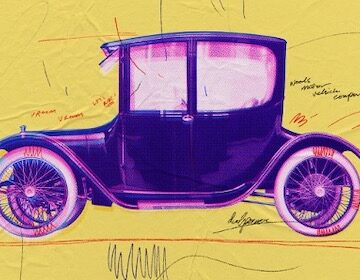
- Publisher: Popular Science
- Editor: Sarah Durn
- Published: February 5, 2026
From my Century In Motion column on Pop Sci
Henry Ford's monopoly on the automobile industry meant that hybrids wouldn't see the light of day for decades.
In October 1914, as gas cars were tightening their grip on America’s roads, Frank W. Smith, president of the Electric Vehicle Association of America, stood before a convention in Philadelphia and declared victory. Electric cars, he said, were “absolutely and unquestionably the automobile of the future, both for business and pleasure.” With mass production and a wider network of charging stations just around the corner, “it is only a matter of time,” he promised, “when the electrically propelled automobile will predominate.”
The future Smith imagined would not show signs of life for nearly 100 years, but it might have come far sooner had America’s industrial leaders stopped treating automotive power as a binary choice between gasoline and electricity. A compelling alternative lay in between...
In 1916, hybrid cars could've changed history. But Ford wouldn't allow it.
Many thanks to Sarah Durn, Popular Science Associate Editor.
Enjoyed this story? You might like "The century-old dream of traveling by hovercraft is still alive" in Popular Science