- Publisher: Popular Science
- Editor: Sarah Durn
- Published: April 3, 2026
From my Century In Motion column on Pop Sci
Even after debuting at the 1893 Chicago World's Fair, moving walkways still haven't made the leap to city streets.
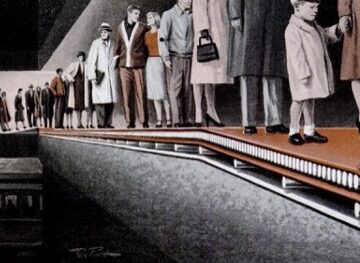
In 1872, New York City’s Broadway was a slow-moving snarl of horses, wagons, and pedestrians, all competing along the same well-worn corridor. Alfred Speer, a merchant known around town as “The Wine Man,” believed the congestion outside his Broadway wine shop, across the street from City Hall, was costing him customers. Speer’s solution was not modest: He proposed an elevated sidewalk, running the length of Broadway, moving constantly at 10 miles per hour, with settees for riders who wanted to sit or chat along the way. He called it the “Endless Traveling Sidewalk.” New York’s state legislature passed the proposal—twice. And the governor, John Dix, vetoed it—twice. More than 150 years later, Broadway is still a gridlocked nightmare, and our sidewalks still don’t move...
In 1871, cities almost got moving sidewalks. What are we still waiting?
Many thanks to Sarah Durn, Popular Science Associate Editor.
Enjoyed this story? You might like "A century ago, suspended monorails were serious mass transit contenders." in Popular Science